
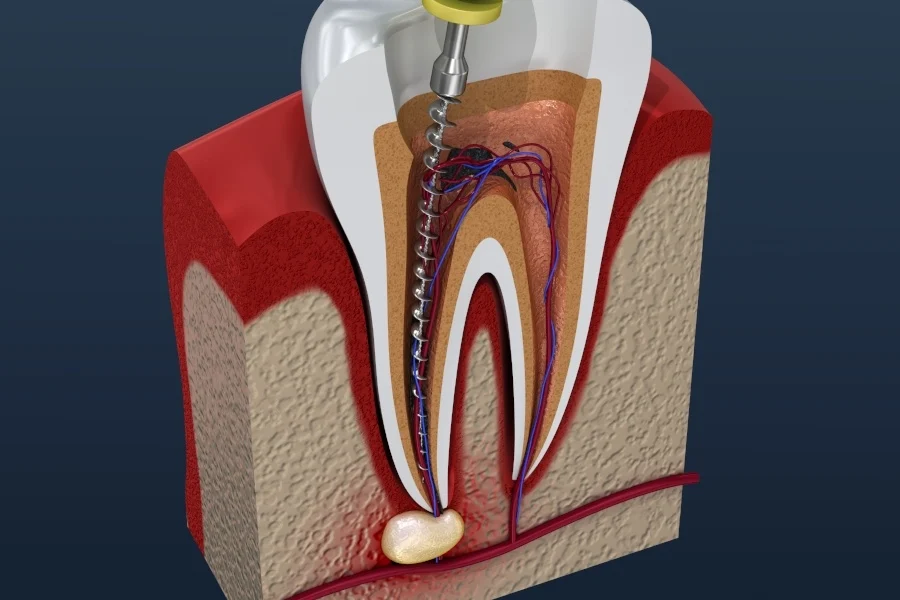
A root canal does not always finish in the practice where it began. A move to a new area or a dentist’s retirement can leave a patient between providers midway through a multi-visit procedure.
A dentist can assess whether they can take over a case and explain what the handover involves. The questions asked at the first consultation shape how safely the treatment concludes.
Why the gap between appointments carries risk
Root canal treatment belongs to endodontics, the branch of dentistry concerned with the dental pulp and the tissues surrounding the root. The work proceeds in stages, and each stage depends on the one before it.
The first visit usually involves a pulpectomy, where the dentist removes the diseased pulp: the nerves, blood vessels and connective tissue inside the tooth. The empty canals then receive a disinfecting dressing and a temporary filling.
A temporary filling is meant to be short-term. The material seals the tooth against saliva and bacteria, while the dentist assesses the existing restoration and the appropriate timing for each patient individually.
If a temporary filling breaks down or comes loose, oral bacteria may re-enter the cleaned canals. A dentist can assess whether further disinfection is needed.
The final stage, obturation, closes the system. The dentist fills the shaped canals with gutta-percha, a thermoplastic material that seals the root space permanently.
Until that seal is in place, delays can leave the tooth vulnerable, so ask the new dentist how soon it needs to be seen. Patients transferring mid-treatment should tell the new practice exactly when the last visit occurred.
A tooth opened three weeks ago presents a different clinical picture from one left dormant for six months.
Getting records and imaging to the new practice
Digital records move easily between practices, but they rarely move on their own. Patients should ask the new dentist what the practice needs from the previous provider, then request those files in writing before the first appointment.
Some practices charge a small administrative fee for copying a file, so it helps to ask about cost at the same time.
The useful documents include the most recent periapical radiographs, the targeted X-rays that show the whole tooth from crown to root tip, along with any CBCT scan taken during diagnosis.
A cone beam scan maps the root anatomy in three dimensions and can reveal extra canals that a flat image misses. Treatment notes matter as much as images.
The previous practice should supply the working lengths recorded during the procedure, the file sizes used and the medicaments placed inside the canals.
Also ask whether the new dentist intends to take fresh baseline images. Many will.
A radiograph taken at the first visit can help the dentist assess the root and surrounding bone and look for changes since the earlier records. That fresh image becomes the reference point for the decisions that follow.
Confirming file compatibility can prevent a wasted trip. Ask the new practice to confirm it has received the files and can open them, because imaging software varies between clinics and a scan that will not load helps no one.
Defining the stage of treatment being inherited
A root canal can stall at several points, and each point demands different work. In some cases the previous dentist completed only the initial nerve removal.
In others the canals have been fully shaped, disinfected and dressed, and only the final fill remains. The distinction changes the plan.
A tooth at the pulpectomy stage needs complete cleaning and shaping before obturation can be discussed. A tooth already shaped may move directly to sealing, provided no infection persists.
At the first visit, ask the new dentist to state the inherited stage in plain terms. Reasonable questions include whether the canals have been measured and shaped, what disinfectant dressing sits in the tooth now, and what clinical steps remain before the permanent restoration.
The same conversation should cover the tooth’s prognosis. A dentist taking over a case will want to confirm the tooth remains restorable, since deep cracks or decay below the gumline can alter the plan entirely.
Patients can also ask how the dentist sequences the remaining visits. The answer shows whether the practice expects a straightforward completion or anticipates complications, and it lets the patient plan time away from work.
A clear answer on staging protects the patient financially, because the remaining work determines the remaining cost.
Equipment and scope of care worth asking about
The tools available can affect how a dentist assesses and treats a tooth. Patients can ask direct questions about equipment without any clinical background.
An electronic apex locator measures the length of each root canal precisely and reduces reliance on estimates from X-rays alone. Rotary endodontic instruments shape canals with more consistency than hand files in many cases.
A dental operating microscope lets the clinician see inside the tooth and locate narrow or calcified canals. Ask whether the practice uses these tools for root canal work, and whether CBCT imaging is available if the anatomy proves complicated.
Scope of care matters as much as hardware. A root canal case passes through disinfection, sealing and final restoration, and the smoothest handovers happen where one practice manages the full course.
Patients settling into a new area often research a local practice such as Mandurah Dental Surgery and ask how the team assesses transferred root canal cases before agreeing to continue treatment.
Continuity inside one practice removes a second handover at the exact moment the tooth needs its permanent protection.
How lingering infection should be handled
An unresolved infection can complicate a transferred case, so ask the dentist how soon the tooth needs to be assessed. Between visits, dentists place intracanal medicaments, disinfecting agents such as calcium hydroxide, inside the canals to suppress bacteria that mechanical cleaning missed.
A patient who has had a gap between visits can ask whether the medicament needs replacing before the canals are sealed and how the dentist assesses the infection.
Dentists generally judge readiness for obturation on clinical signs: the absence of pain and swelling, a dry canal at inspection and no discharge from the tooth.
Patients can ask what criteria the practice applies before committing to the permanent fill. The dentist can explain what they would do if they found signs of an ongoing infection.
Patients also ask about antibiotics, and the answer often surprises them. Whether medication has any role in a given case is a question for the treating dentist, who can judge the infection and the patient’s history directly.
Root canal retreatment can require extra visits and expense if a tooth fails to heal. Ask the new dentist how the findings affect the timing of the next visit.
Planning the final restoration and its timing
A finished root canal is not a finished tooth. Once the canals are sealed, the dentist can explain how a permanent restoration can protect the tooth.
The dentist can explain which permanent restoration is next and how it fits into the remaining appointments.
Patients should ask which restoration the dentist recommends and why. Back teeth absorb heavy chewing forces, and a dentist may recommend a crown for a root-treated molar.
Front teeth with minimal structural loss sometimes manage with a composite build-up instead. The restoration conversation can go one level deeper.
Patients can ask whether the tooth needs a post to anchor the build-up, what crown materials the practice works with, and how the choice affects durability. A dentist should answer in terms of the tooth’s remaining structure, not habit.
The timeline deserves a direct question as well. The patient should ask how long the temporary restoration can safely remain, how soon after obturation the crown appointment should occur, and what the practice does if other treatment competes for that slot.
If the answer stays vague, ask for specifics, including when the tooth should be restored and what could happen if the appointment is delayed.
What the first appointment should cover
Practices structure takeover consultations differently, and the patient should know the format before sitting in the chair. Some dentists treat the first visit as assessment only: records review, fresh imaging and a written plan.
Others begin treatment the same day if the tooth needs urgent attention. Useful questions include how long the appointment will run, whether any treatment will happen that day and at what cost, and what the patient should bring.
A written symptom history helps the new dentist considerably. Useful details include the dates of previous treatment, any antibiotics prescribed, and every episode of pain or swelling since the last visit.
A written page is more reliable than memory under the stress of a dental chair.
Fees, billing and emergency cover
A mid-treatment takeover rarely bills like a standard case. Some practices charge for the remaining stages only, while others bill the procedure as a whole because they assume responsibility for work they did not start.
Patients should ask how the practice structures fees for inherited cases and request an itemized estimate before treatment resumes. Ask each practice how it handles any payments already made.
A written breakdown from both practices can help clarify which stages have already been paid for. It also gives the patient a clean record if an insurance claim follows.
Emergency arrangements matter in the gap before the final seal. Temporary fillings dislodge, and flare-ups happen.
Patients should ask how the practice handles urgent fit-ins, whether it reserves same-day slots for emergencies, and who to contact outside office hours if the temporary comes loose or pain escalates.
Practical interim advice is worth requesting as well. If a temporary filling comes out, call the dental practice and ask what to do until the tooth can be assessed.
Patients can also ask whether the practice has handled transferred cases before.
None of these questions requires clinical training to ask, and a competent practice welcomes them. Specific, plain answers at that first consultation show the habits a transferred case needs.
The practical first step is a phone call to the previous practice to request the complete file. Those records support the decisions that follow.
