
Most foot problems start small. A heel aches on the first steps out of bed. A toenail presses into the skin beside it. Some complaints like these belong to soap and a decent pair of shoes, and others belong to a clinician, and knowing which is which is a genuinely useful skill. The boundary between the two is clearer than it looks.
What everyday foot care covers
Home foot care is hygiene, and hygiene does real work. Washing every day and drying carefully between the toes denies the fungi behind tinea pedis, better known as athlete’s foot, the damp environment they need to spread. Moisturizer belongs on dry heels and rough skin, though not between the toes, and nails do best trimmed straight across and left long enough to protect the nail bed.
A pharmacist or clinician can discuss possible causes of itching and peeling between the toes. Thickened, discolored nails often travel with it, since the same fungi cause onychomycosis, and nail infections are slower to shift. Plantar warts follow a similar pattern: verruca pedis is a viral infection from human papillomavirus; it gets mistaken for corns constantly, and many cases clear without treatment, while painful or spreading clusters deserve a clinic visit.
Hygiene cannot change how the foot is built or how it loads. No amount of scrubbing straightens a toe or restores feeling to a numb sole. Persistent foot trouble of that kind deserves professional attention.
The risks of bathroom surgery
An ingrown toenail, onychocryptosis in clinical language, has a way of inviting home intervention. The corner digs in, pain follows, and scissors often come out. The problem is that cutting down the side of the nail almost always leaves a spike behind, the wound deepens, and the toe responds with infection and a mound of overgrown tissue that bleeds at a touch. A podiatrist removes the offending nail border cleanly, conservatively where possible and with a minor procedure where it keeps recurring.
Corns and calluses create a similar temptation. Both are hyperkeratosis, a thickening of the skin’s outer layer driven by repetitive friction and shear, and both tempt people toward medicated corn pads and callus razors. The acid in those pads burns healthy skin as readily as the corn itself, and tissue necrosis and secondary bacterial infection are documented outcomes, particularly in feet with poor circulation. Razors slice unevenly and often too deep.
A podiatrist pares thickened skin back with sterile scalpel debridement, controlled in a way a bathroom blade never is, and then looks for the pressure point that created the callus in the first place. Removing hard skin without removing its cause usually brings the same problem back. None of these are bathroom jobs.
How foot mechanics travel up the body
The foot is the first link in what clinicians call the kinetic chain: each foot strike sets the ankle, the ankle guides knee tracking, and the knee and hip together position the lower back. When the arch rolls too far inward with each step, a pattern called excessive pronation, the shin rotates with it and the knee drifts out of its line. Rigid high arches create the opposite problem: they absorb shock poorly, so force travels upward into joints not built for it.
Plantar fasciitis is the classic example of a load problem at the bottom of the chain. The fascia along the sole takes more tension than it can recover from, and the result is sharp heel pain, most notorious on the first steps of the morning. Hallux valgus, the bunion, is slower: the big toe joint drifts out of alignment under genetic predisposition and years of narrow footwear, and biomechanical intervention is what slows the drift.
Left alone, these patterns may not stay in the foot. Altered knee loading is associated with the wear seen in knee osteoarthritis, and changes in hip movement can play a part in hip impingement or lower back pain. The links are contributory, not certain. A clinician watches a patient walk and weighs symptoms in context before naming any single cause.
Symptoms that call for a podiatry appointment
Certain signs end the home experiment. Heel or arch pain that persists past two weeks of rest and sensible shoes is less likely to be a simple bruise and more likely to be mechanical. Numbness or burning in the feet points at nerves, and nerves don’t respond to moisturizer. Skin cracks or sores that haven’t healed within a couple of weeks need a professional look, and sudden warmth and swelling in one foot need one quickly.
For pain at that stage, a search for “podiatrists perth” can turn up clinics that offer a structured gait and lower-limb assessment, which can help trace the mechanical cause. It helps to arrive with a symptom history: when the pain started, what makes it worse, which shoes seem to matter. Waiting can add a second problem that is easy to miss. A person limping to protect a sore heel shifts load to the other side, and the sore hip or aching back that follows may be treated as a new problem when it came from the first one.
Pain that stays, sensation that changes, skin that won’t heal and a foot that suddenly swells are signs the problem has moved past self-care.
Children, diabetes and other reasons to book earlier
Children’s feet
Most toddlers are flat-footed, and most develop a visible arch by the time they’re well into primary school, so pediatric flat feet on their own aren’t a diagnosis. The signs worth booking for are functional: severe in-toeing, tripping that happens often enough to be a pattern, shoes wearing down unevenly between left and right, or a child who flags on walks that siblings manage easily. Pain reported in the feet and calves, often filed under growing pains, deserves a proper look when it keeps recurring. An early assessment either delivers reassurance, which is a perfectly good outcome, or catches a gait problem while the bones are still soft enough to guide.
Diabetes and chronic illness
Diabetes changes the rules completely, because diabetic peripheral neuropathy removes the sensation that warns of damage. A stone in the shoe or a blister from new footwear can go unfelt, unfelt injuries become ulcers, and ulcers become the kind of infections that threaten the limb. Rheumatoid arthritis brings its own foot changes as small joints shift shape over time.
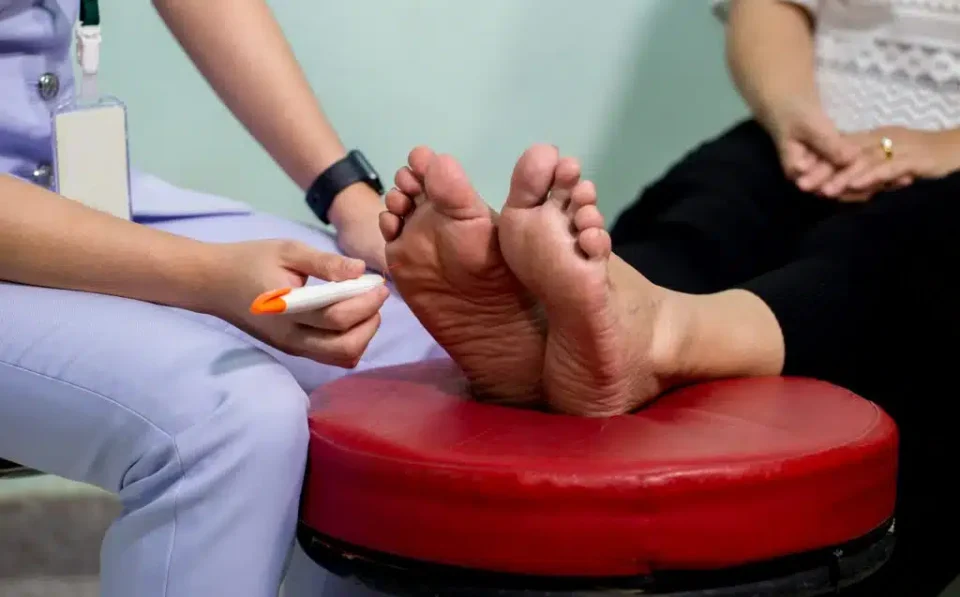
That’s why periodic podiatric screening is standard for anyone with these conditions, with or without symptoms. A typical screening tests sensation with a monofilament pressed against the skin and checks circulation with a Doppler ultrasound. The practical step is to ask the treating clinician what foot reviews are appropriate, and to ask the podiatry clinic what referral arrangements apply before booking. For someone with diabetes, podiatry visits are routine maintenance in the same way dental visits are.
What a podiatry assessment involves
A first appointment starts with history: where it hurts, when it started, what makes it worse, what the shoes look like. Then comes the biomechanical assessment, which means watching the patient stand and walk, then measuring joint range of motion and muscle strength through the foot and ankle. Many clinics add video gait capture on a treadmill and digital pressure plate scanning, which maps exactly where load concentrates through each step. The picture that emerges is usually enough to explain the pain.
Treatment follows the diagnosis. Custom foot orthotics are prescription inserts, made from a cast or scan of the patient’s feet, that change foot posture and spread pressure across the sole so irritated tissue gets a chance to recover. Shockwave therapy treats chronic tendon and fascia problems that have stopped responding to rest. Nail and skin conditions get treated with sterile instruments, and footwear gets prescribed with the same seriousness as the orthotics. It is a musculoskeletal consultation that happens to start at the feet.
Footwear: structure over cushioning
The shoe industry sells softness, and softness sells. Thick foam feels wonderful in the shop, but foam compresses within months, and a shoe that only cushions does nothing to control how the foot moves inside it. For anyone with actual pain, structure matters more.
The useful checks take about a minute. Hold the shoe at both ends and twist: a stable shoe resists, because torsional rigidity stops the shoe wringing under load. Press the heel counter, the cup around the back of the heel, and it should feel firm. Look at the sole’s profile too, since a gentle rocker under the forefoot takes strain off a stiff big toe joint with every step. Fit counts as much as construction, and feet swell through the day, so a pair that fits perfectly at nine in the morning can be tight by dinner. Afternoon fitting is the safer habit.
A home self-audit that stays within safe limits
Between appointments, or before the first one, a weekly self-audit keeps small problems visible. The job is observation. Treatment stays with the clinic.
Once a week, check:
- The soles (a mirror or phone photo helps), for cracks, blisters, corns or color changes
- Between the toes, for peeling skin or splits
- The nails, for thickening, discoloration, lifted edges or corners pressing into skin
- Skin temperature and color, one foot compared against the other
- Shoe wear, since a heel worn down on one side says something about gait
- Anything new or slow to heal, written down with the date it appeared
Once the line is clear, the division of labor is easier. Home care keeps feet clean and observed, and the podiatrist takes over the moment structure or sensation is in question. Anything new that does not settle is worth an appointment. For anyone with diabetes, the same check belongs in the daily routine, and a blister, broken skin, or a patch that looks red, feels hot or puffs up is a reason to book straight away rather than wait for the next check.
